
We are no longer managing projects in a stable, predictable environment. We are managing in a VUCA world — a world shaped by Volatility, Uncertainty, Complexity, and Ambiguity.
Originally emerging from military strategy discussions during the late Cold War era, the term VUCA World now perfectly describes modern business reality — rapid technological shifts, AI disruption, regulatory changes, remote work, global supply chain shocks, and black swan events like pandemics.
For project managers, VUCA is not a theory. It is daily life.
Let’s explore what this means for modern project management — and how you can build systems, teams, and processes that thrive instead of merely survive.
Table of Contents
Understanding VUCA World Through a Project Management Lens
Volatility – The Speed of Change
Volatility refers to the rate and magnitude of change.
In project environments, volatility shows up as:
- Sudden scope changes
- Market-driven pivots
- Technology updates mid-project
- Budget reallocations
- Regulatory changes
Example:
You begin a 6-month software implementation project. In month two, a new AI tool disrupts your architecture assumptions.
Your original plan? Already outdated.

PM Response to Volatility:
- Shorter planning cycles
- Iterative development (Agile, Hybrid models)
- Rolling-wave planning
- Strong change control discipline
- Buffer management
In a volatile environment, flexibility beats rigidity.
Uncertainty – The Unknown Unknowns
Uncertainty means lack of predictability and incomplete information.
As project managers, we often face:
- Undefined client expectations
- Unclear requirements
- Emerging technologies
- Unknown risks
Even detailed risk registers cannot predict everything.
PM Response to Uncertainty:
- Scenario planning
- Prototyping and experimentation
- Frequent stakeholder engagement
- Strong risk identification workshops
- Data-driven decision-making
In uncertain environments, your role shifts from planner to sense-maker.
You don’t just manage tasks.
You manage clarity.
Complexity – Interconnected Variables
Complexity arises when multiple systems, stakeholders, technologies, and dependencies interact.
Today’s projects involve:
- Cross-functional teams
- Multi-vendor ecosystems
- Regulatory oversight
- Global remote teams
- Integration with legacy systems
A small change in one module can impact five other systems.
PM Response to Complexity:
- Systems thinking
- Dependency mapping
- Clear communication structures
- Modular project architecture
- Strong governance frameworks
Complexity demands structured thinking — not oversimplification.
As someone who operates across digital marketing systems, ad platforms, feeds, APIs, and automation workflows, you’ve likely seen this firsthand — small configuration changes can ripple across the ecosystem.
That’s VUCA in action.

Ambiguity – When Meaning Isn’t Clear
Ambiguity occurs when information exists, but its interpretation is unclear.
Examples:
- Vague strategic direction
- Undefined success criteria
- Conflicting stakeholder expectations
- New technologies without precedent
You may hear:
“We want innovation — but no risk.”
“We want transformation — but no disruption.”
That’s ambiguity.
PM Response to Ambiguity:
- Clarify assumptions
- Define measurable outcomes
- Establish decision criteria
- Run pilots before scaling
- Document learnings
In ambiguous situations, clarity becomes a leadership skill — not just a documentation task.
From VUCA to VUCA Today – A Modern PM Mindset
Some leadership thinkers propose reframing VUCA:
| Traditional VUCA | Leadership Response |
|---|---|
| Volatility | Vision |
| Uncertainty | Understanding |
| Complexity | Clarity |
| Ambiguity | Agility |
For project managers, this means:
- Vision: Align every project with strategic outcomes
- Understanding: Deep stakeholder engagement
- Clarity: Clear scope and measurable deliverables
- Agility: Ability to pivot without chaos
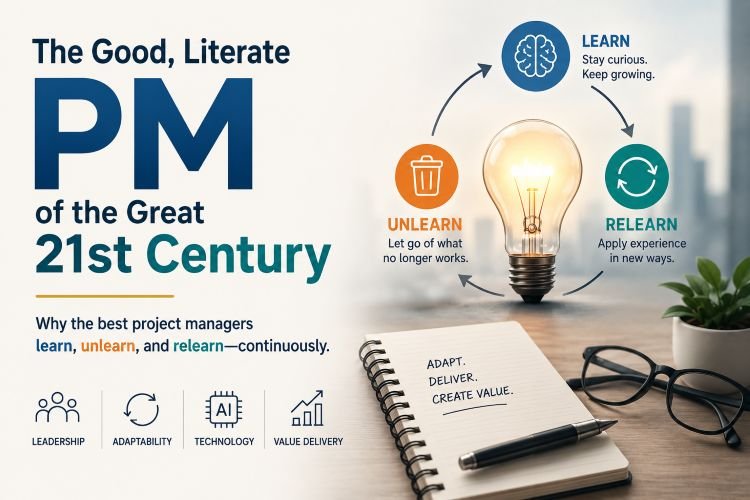
How Project Managers Can Thrive in a VUCA World
Here are practical shifts every PM should make:
1. Move From Control to Adaptability
Traditional PM focused on control and predictability.
Modern PM focuses on adaptability and responsiveness.
2. Embrace Hybrid Methodologies
Waterfall alone struggles in volatile conditions.
Agile alone may lack governance for complex environments.
Hybrid models provide balance.
3. Strengthen Communication Architecture
In VUCA, communication failure is the biggest risk.
Establish:
- Regular cadence meetings
- Clear escalation paths
- Transparent dashboards
- Real-time collaboration tools
4. Invest in Risk Intelligence
Risk management should not be a static document.
It must be:
- Reviewed frequently
- Quantified when possible
- Connected to decision-making
5. Develop Emotional Intelligence
VUCA increases anxiety in teams.
A PM must:
- Build psychological safety
- Manage stakeholder expectations
- Lead calmly during uncertainty
This is where technical PM meets human leadership.
The Future of Project Management in a VUCA World
Emerging trends shaping PM in VUCA:
- AI-assisted project planning
- Predictive analytics for risk
- Data-driven dashboards
- Automated reporting
- Cross-functional digital collaboration
As someone deeply involved in AI systems and digital workflows, you are already seeing this transformation. The future PM will not just manage tasks — they will manage ecosystems powered by intelligent systems.
My Final Thoughts
VUCA World is not temporary. It is the new normal.
Project managers who cling to rigid planning will struggle.
Those who build adaptability, systems thinking, and leadership clarity will thrive.
In a VUCA world:
- Plans will change
- Risks will evolve
- Stakeholders will shift
- Technology will disrupt
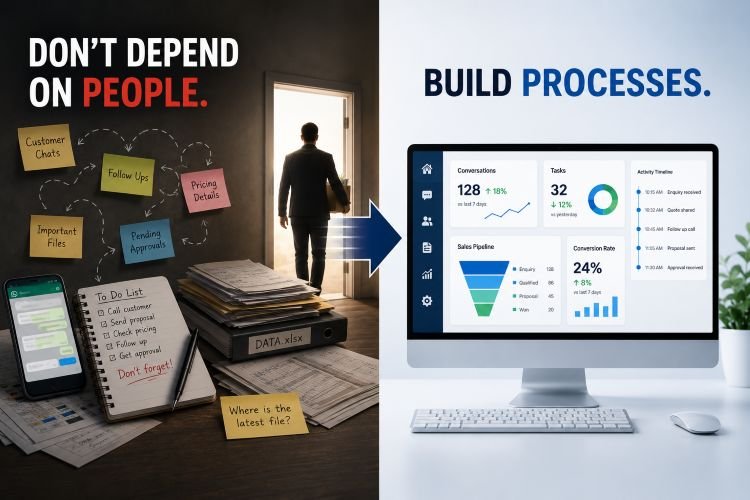
But strong project management processes — supported by clarity, communication, and agility — will always create structure within chaos.
And that is the real art and science of project management.
If you found this valuable, consider sharing it with your network.
Someone navigating uncertainty might need this clarity today.
Article By Rohit Katke for PMProcesses.com
Connect with Our Team