In PMI’s CPMAI framework, the iterative and data-centric nature of AI initiatives is visualized as a circular, wheel-shaped lifecycle rather than a linear process.
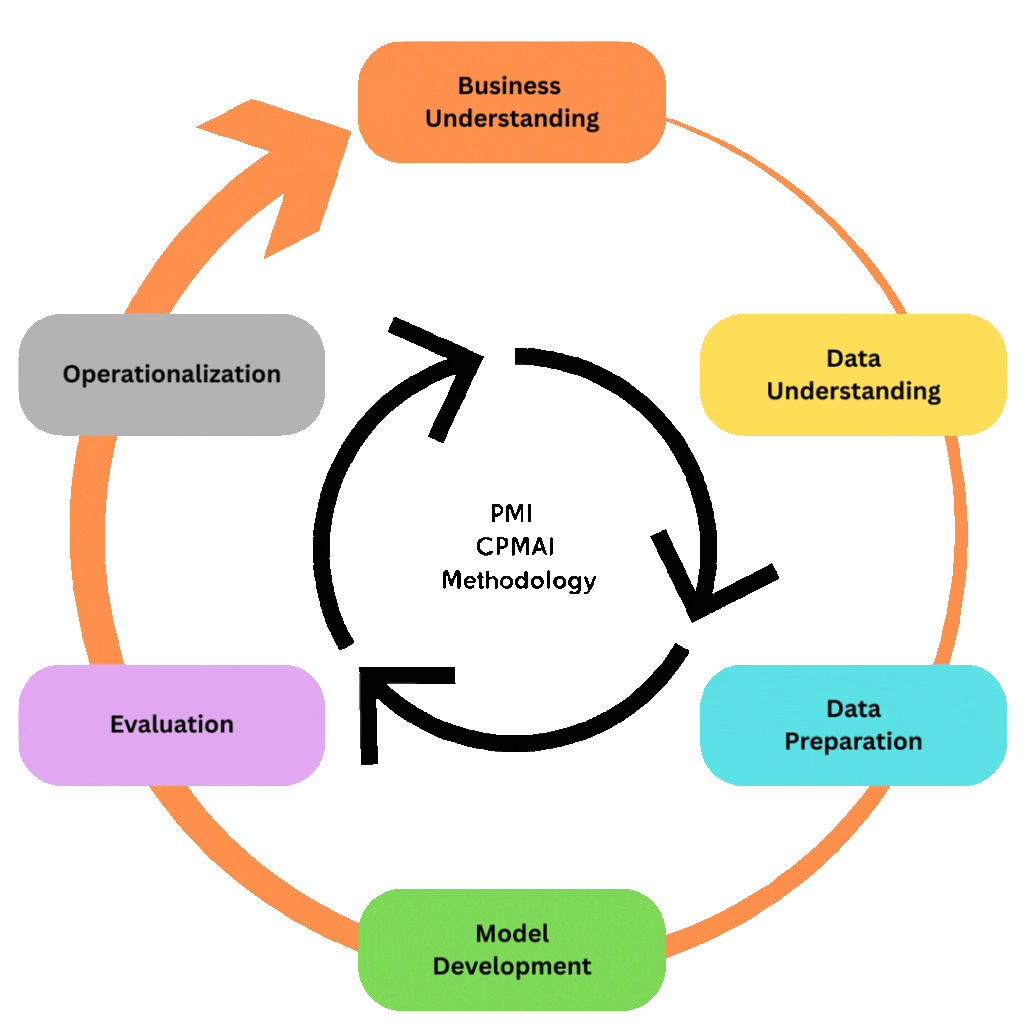
The lifecycle consists of six interconnected phases, each building on and informing the others:
CPMAI Phase 1 – Business Understanding
Clearly define business goals, success criteria, and requirements, and align them with what AI can realistically deliver.
CPMAI Phase 2 – Data Understanding
With clear objectives in place, identify the data required to support the AI use case and assess its availability, relevance, and quality.
CPMAI Phase 3 – Data Preparation
Prepare, clean, and transform data to ensure it is accurate, reliable, and suitable for producing trustworthy outcomes.
CPMAI Phase 4 – Model Development
Develop AI models only after business context, data understanding, and data readiness are firmly established, ensuring alignment and reducing downstream risk.
CPMAI Phase 5 – Evaluation
Validate the AI solution by testing it in real-world or near-real-world conditions to confirm it meets business and performance expectations.
CPMAI Phase 6 – Operationalization
Deploy the AI system into production and establish processes to run, monitor, and maintain it so that it consistently delivers the intended business value.
Because CPMAI is an iterative loop, after each cycle of AI development, we come right back to the start of the CPMAI cycle at Business Understanding, iterating the AI system to continue to meet evolving requirements.
AI is all about data, which means you need to manage AI projects like data projects, not as a typical IT or application development project. A software application can often stay the same even if the data changes. But in AI, you feed new data into the same model code, and it behaves differently.
This need for data is both the power and challenge of AI, which is why traditional software development processes aren’t enough.
You need a systematic way to handle data collection, cleaning, labeling, retraining, and continuous evaluation because a model can drift out of date fast if the underlying data shifts.
The real complexity lies in how you shape and prepare the data.
This requires a systematic approach to running AI projects to ensure consistent results. It’s not that we throw out all of our existing project management practices. Instead, we build on them, update them to address the unique needs of AI.
CPMAI as an approach fits well with how organizations already manage projects, but it zeroes in on the data-centric aspects that can make or break AI initiatives.
If we just say AI, we run the risk of talking about projects with vastly different scopes, risks, costs, data needs, and technology challenges.
We need a way to get more specific with what we mean by AI.
A key approach is to break applications of AI down into seven main patterns – common categories in which people apply AI to meet their needs.
- Conversational Pattern
- Recognition Pattern
- Pattern and Anomaly Detection pattern
- Predictive Analytics and Decision Support Pattern
- Hyperpersonalization Pattern
- Autonomous Systems Pattern
- Goal-driven Systems Pattern
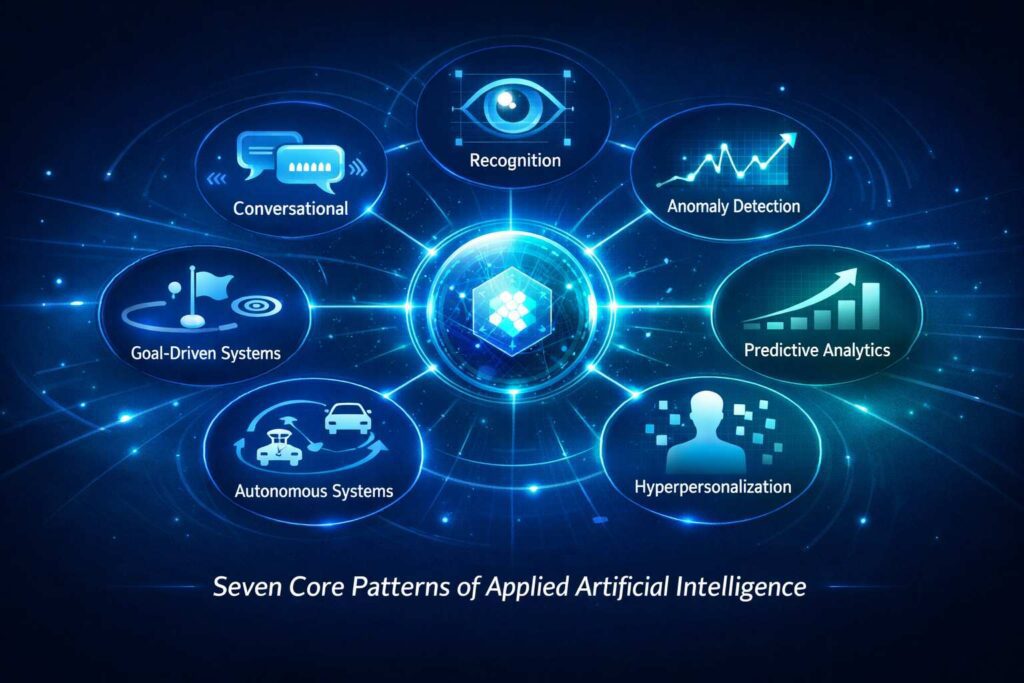
CPMAI uses these seven patterns as shortcuts in AI Projects to identify the right data strategy, technology, and success metrics.
These patterns help us figure out which AI approach makes sense for the problem we’re trying to solve.
For instance, an AI-enabled chatbot like a virtual assistant or customer support bot would likely fall under the conversation and human interaction pattern.
You’re far less likely to chase the wrong solution if you align your project with the right pattern from the start, because a project that involves AI to analyze medical radiology images is going to need a different approach than a customer support chatbot.
The cost, scope, risks, and complexity of the solutions vary considerably as well. So when someone says I’m working on AI, you can ask, “Which pattern are you focusing on?”
Connect with US to discuss more about AI in Project Management and CPMAI. Hire an AI Freelance Project Manager