
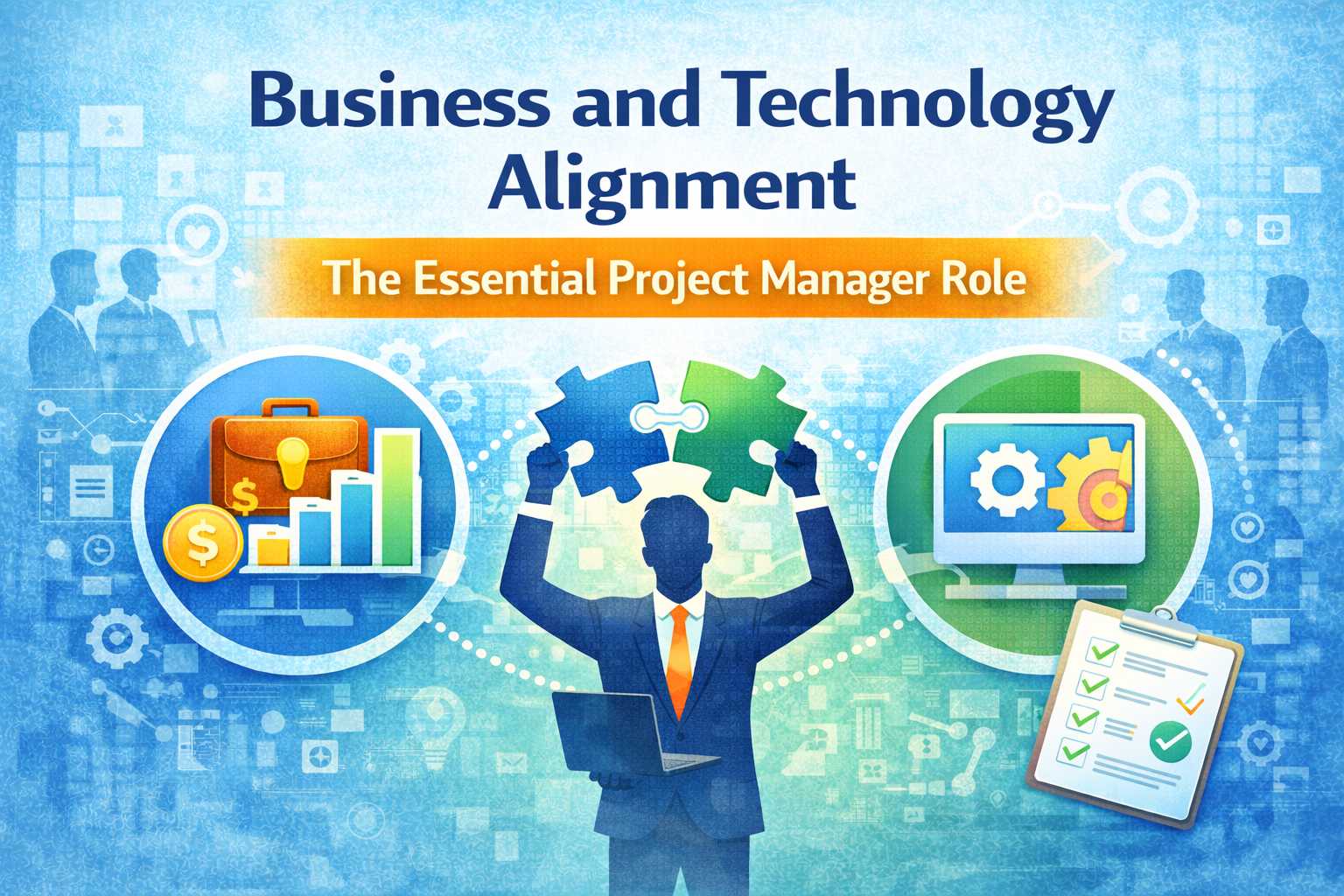
Business and technology alignment is a critical challenge and opportunity for organizations striving to stay competitive in today’s fast-paced digital economy. As companies increasingly rely on technology to support and drive their strategic objectives, the ability to seamlessly integrate business goals with technological capabilities can distinguish market leaders from laggards. At the heart of this alignment process lies the project manager role, which acts as a pivotal bridge connecting diverse teams, managing expectations, and ensuring that projects deliver value aligned with business strategy. This article explores the intricacies of business and technology alignment and highlights why the project manager’s role is indispensable in achieving stakeholder alignment and successful project outcomes.
Understanding Business and Technology Alignment
Before delving into the project manager’s role, it is important to clarify what we mean by business and technology alignment. At its core, this concept involves ensuring that technology initiatives, investments, and operations are closely tied to the organization’s business objectives and overall strategic direction. Alignment is not merely about deploying the latest technology, but about leveraging IT in ways that optimize operational effectiveness, enhance customer experiences, support innovation, and ultimately drive business growth.
Organizations frequently struggle with misalignment for various reasons: siloed departments that operate independently, communication gaps between technical and business teams, evolving market demands, and shifting priorities. When alignment is poor, projects may fail to deliver intended business benefits, cost overruns can occur, and morale decreases as stakeholders become frustrated by disconnects and unmet expectations.
Achieving and maintaining alignment requires ongoing dialogue, shared understanding, and coordinated efforts across organizational boundaries. This is where the project manager role becomes particularly crucial.
The Project Manager Role in Driving Business and Technology Alignment
The project manager plays a multi-dimensional role that goes far beyond traditional task tracking and deadline management. In modern organizations focused on innovation and digital transformation, project managers are strategic enablers who facilitate collaboration, foster stakeholder engagement, and translate business needs into actionable technical plans.
1. Acting as the Bridge Between Business and Technology Teams
One of the biggest challenges is the conventional divide between business units — often driven by customer needs, market trends, and revenue targets — and technology teams, who concentrate on systems, infrastructure, and technical solutions. The project manager serves as a crucial interface, leveraging strong communication skills to ensure mutual understanding. They articulate business goals clearly to technical experts and explain technical constraints or possibilities in terms familiar to business stakeholders. This “translation” function helps prevent misunderstandings and promotes mutual respect.
For example, during a software development project, the project manager might work with marketing to understand the key customer value propositions that need enhancement, then collaborate with developers to ensure these features are prioritized correctly in the product backlog. Without this mediation, the business might push for flashy features while the technology team struggles with underlying architectural issues.
2. Facilitating Stakeholder Alignment to Mitigate Conflicts and Build Consensus
Stakeholder alignment is a key subcomponent of overall business and technology alignment. Given that projects often involve multiple stakeholders with varying priorities and expectations, the project manager must engage proactively with all parties to establish a shared vision and agreed-upon success criteria.
Regular stakeholder meetings, transparent reporting, and active listening help surface and address concerns early. The project manager uses negotiation and conflict resolution skills to balance competing demands. By maintaining alignment among executives, business users, technical teams, vendors, and sometimes customers, the project manager ensures project efforts remain focused, resources are appropriately allocated, and surprises are minimized.
A practical example might be a system upgrade affecting both customer service operations and backend IT infrastructure. The project manager coordinates planning so service disruptions are minimized during peak hours, achieving stakeholder buy-in from both departments.
3. Aligning Projects With Business Strategy Through Rigorous Planning and Adaptation
A strong project plan is the foundation for aligning technology activities with business goals. The project manager must have a deep understanding of the organization’s strategic priorities and translate these into project scope, objectives, timelines, and deliverables.
Beyond the initial planning, continuous monitoring and adaptation are critical to maintaining alignment in dynamic environments. Emerging risks, market changes, or evolving customer feedback might require project adjustments. The project manager’s ability to make informed decisions, supported by data and stakeholder inputs, ensures projects stay relevant and contribute real value.
Tools such as balanced scorecards, benefits realization frameworks, and project portfolio management techniques are often deployed by project managers to link tactical activities to strategic outcomes transparently.
Skills and Competencies that Empower Project Managers in Alignment Roles
Given the complexity and importance of their activities, project managers involved in business and technology alignment must hone specific skills and competencies:
– Strong Communication and Interpersonal Skills: Clear, empathetic communication builds trust and understanding across diverse groups.
– Business Acumen: Understanding market dynamics, financial metrics, and business models enables better decision-making.
– Technical Literacy: While not required to be experts, project managers must grasp enough technology to identify risks, opportunities, and constraints.
– Leadership and Influence: Leading without authority in matrix environments demands influencing skills and diplomatic collaboration.
– Change Management Expertise: Driving alignment often means guiding teams through organizational change and overcoming resistance.
– Stakeholder Management: Prioritizing and engaging stakeholders appropriately to build consensus and commitment.
– Problem-Solving and Critical Thinking: Navigating complex challenges to find solutions that satisfy both business needs and technical feasibility.
Organizations investing in training and developing project managers with these competencies tend to see significantly better alignment outcomes and project success rates.
Real-World Examples Highlighting the Project Manager’s Impact
Case Study 1: Digital Transformation in a Financial Services Firm
A large financial institution embarked on a digital transformation initiative to improve customer engagement via a revamped mobile app and integrated backend systems. Initially, the project faced delays because requirements from marketing were unclear, and IT teams were focused on infrastructure upgrades unrelated to customer-facing features.
Bringing in a seasoned project manager with expertise in cross-functional collaboration helped the company realign priorities. The project manager facilitated workshops between customer service, compliance, IT, and product teams to clarify business goals and technical constraints. Through regular stakeholder alignment meetings and transparent progress tracking, the project regained momentum and was delivered on time, increasing app usage by 30% within six months.
Case Study 2: Manufacturing IoT Deployment
A manufacturing company sought to deploy IoT sensors on production lines to improve operational efficiency. The technology team proposed a phased rollout based on technical feasibility, but the business side pushed for an accelerated timeline to meet competitive pressures.
The project manager navigated this tension by conducting a risk-benefit analysis with both sides and proposing a pilot program to validate assumptions quickly. They kept leadership informed, aligned expectations about scope, and managed vendor coordination. The pilot’s success led to a scaled implementation aligned with business goals without risking plant downtime.
Best Practices for Project Managers to Enhance Business and Technology Alignment
Based on industry insights, the following best practices can empower project managers to excel in their alignment roles:
– Cultivate Early Involvement: Engage business stakeholders early in the project lifecycle to understand their vision and avoid scope creep.
– Develop a Clear Communication Plan: Tailor messages to different audiences and keep communication channels open.
– Use Collaborative Tools: Leverage project management platforms and dashboards that provide real-time visibility for all stakeholders.
– Prioritize Continuous Learning: Stay abreast of industry trends, emerging technologies, and organizational strategies.
– Promote Agile and Flexible Methodologies: These allow iterative feedback and adjustment, fostering better alignment.
– Champion Benefits Realization: Track and measure business outcomes post-implementation to validate project value.
– Encourage Cross-Functional Teams: Facilitate diverse team collaboration to enhance creativity and mutual understanding.
Conclusion
Business and technology alignment is not a one-time effort but a continuous journey requiring commitment, collaboration, and clarity. The project manager role is essential in steering this journey by acting as a trusted intermediary who connects strategic intent with operational delivery. Through effective stakeholder alignment, communication, and adaptive planning, project managers help organizations realize the full potential of technology investments in driving business success. Investing in skilled project managers and empowering them with the right tools and authority can transform alignment from an aspirational concept into a competitive advantage.
Learn more about Project Management. connect with us more about business and technology.