Category: Project Management Processes

  • Good Project Manager as a Strong Business Partner – Beyond Execution

    Good Project Manager as a Strong Business Partner – Beyond Execution

    When a Project Manager Becomes a Business Partner – Do They Become a Product Manager?

    This is exactly where many people get confused. Let’s unpack it deeply (and clearly!) because the answer is yes and no… and that’s where the magic lies.

    Short answer: Not exactly.

    A PM who becomes a business partner adopts some product-thinking traits, but does NOT fully become a Product Manager.
    Instead, they evolve into a strategic Project Manager – a PM who understands and aligns business goals, but still primarily owns delivery, not product decisions.

    Let’s break it down with clarity and energy.

    1. What Product Managers Actually Own

    A Product Manager owns:

    • Product vision
    • Customer needs
    • Market understanding
    • Feature prioritization
    • Product roadmap
    • Business outcomes (revenue, adoption, retention)

    They decide WHAT should be built and WHY.

    PM (Product) = Business + Customer + Value + Vision

    2. What a Business-Partner Project Manager Owns

    A Project Manager as a Business Partner owns:

    • Delivery strategy
    • Execution alignment
    • Resource planning
    • Cross-team coordination
    • Risks & dependencies
    • Time, quality, and cost
    • Making sure the roadmap becomes REAL

    They ensure the HOW, WHEN, and WITH WHAT RESOURCES.

    PM (Project) = Execution + Governance + Delivery + Value Realization

    3. Where the Overlap Happens (and causes confusion!)

    When a PM becomes business-oriented, they start doing things like:

    ✔ Understanding the customer/problem
    ✔ Challenging features that don’t add value
    ✔ Validating ROI behind requirements
    ✔ Helping prioritize what gives maximum business impact
    ✔ Thinking long-term instead of task-to-task

    These are product-like traits, but they do not replace actual product ownership.

    So yes – they think more like a Product Manager but still operate AS a Project Manager.

    4. Key Differences (Crystal Clear Chart)

    AspectProject Manager (Business Partner)Product Manager
    Primary FocusDelivering value efficientlyChoosing what value to create
    Core ResponsibilityExecution + Alignment + DeliveryVision + Roadmap + Market Fit
    Customer RoleUnderstands needs to support executionOwns customer research & insights
    Success MetricOn-time, value-delivered, organizational alignmentProduct success (revenue, adoption, NPS)
    Decision PowerDecides how to deliverDecides what to build
    Risk FocusOperational, delivery, processMarket, business, product viability

    5. So What Actually Happens? A Better Explanation

    When a PM becomes a business partner:

    • They stop being task managers
    • They start becoming business enablers
    • They think strategically like product leaders
    • They influence what gets built
    • They ensure business value is realized

    But they do not replace the product role.

    Instead, they become a hybrid strategic PM – the kind of PM every modern organization desperately needs.

    6. Does a Project Manager ever transition into a Product Manager?

    YES!
    Many excellent Product Managers were once business-oriented Project Managers.

    Why?

    Because the skills of a business-partner PM – stakeholder management, prioritization, value-thinking, business acumen – are powerful stepping stones into product leadership.

    But the shift requires:

    • Customer research
    • Market analysis
    • Product lifecycle understanding
    • Revenue and pricing concepts
    • UX & usability knowledge

    Without these, you’re still a strong PM, not a Product Manager.

    Powerful One-Line Conclusion

    A Project Manager who becomes a Business Partner does not automatically become a Product Manager – but they become the BEST possible version of a Project Manager: the one who drives business value, not tasks.

    Lets discuss more if you are interested, contact us.

    To learn more about Project Management connect with the world community of project management professionals.

  • Talking to the Super Machine: Prompt Engineering for PM

    Talking to the Super Machine: Prompt Engineering for PM

    Artificial Intelligence is reshaping how project professionals plan, communicate, and deliver results. After studying PMI’s guide “Talking to the Machine – Prompt Engineering Essentials for Project Professionals,” I realized that prompt engineering is not just a technical skill — it is now a core competency for every project manager.

    In this post, I am sharing the most practical and impactful insights from the guide, along with why they matter to all of us leading projects in the AI era.

    1. Prompt Engineering: The New Power Skill for PMs

    Generative AI tools like ChatGPT, Gemini, Claude, and Microsoft Copilot communicate using natural language.
    That means the quality of output depends on the quality of our prompts.

    Prompt engineering is the art of telling AI what you want, why you want it, and how you want it delivered — in a structured, contextual, and conversational manner.

    For project managers, this skill directly improves:

    • Clarity
    • Productivity
    • Decision-making
    • Stakeholder alignment
    • Speed of delivery

    2. PM Skills Naturally Make You a Good Prompt Engineer

    The guide highlights something powerful:
    Project managers already possess the core skills needed for effective prompting.

    These include:

    • Communication skills: Explaining goals and constraints clearly
    • Creativity and critical thinking: Asking better questions
    • Logical reasoning: Breaking problems into smaller parts
    • Problem-solving mindset: Iterating until you get a solid answer

    Your existing PM strengths already set you up for success with GenAI.

    3. AI Works Best When You Treat It as a Conversation

    GenAI is not a search engine — it’s a “thinking partner.”

    The best results come through dialogue, not one-shot queries.

    The ideal workflow:

    1. Start with an open-ended question
    2. Let AI respond
    3. Narrow the scope
    4. Ask clarifying questions
    5. Request deeper insights, examples, or alternatives

    This diverge → converge method helps you shape high-quality output.

    4. Use Proven Prompt Patterns for Better Results

    PMI introduces several prompt patterns that dramatically improve effectiveness.

    The most useful ones:

    Persona Prompt

    “Act as a senior project stakeholder…”
    → Good for expert-style output.

    Flipped Interaction

    “Ask me questions until you understand the requirement.”
    → Great for requirement discovery and stakeholder simulation.

    Alternative Approaches

    “Give me 3 ways to solve this problem and compare pros/cons.”
    → Ideal for brainstorming.

    Cognitive Verifier

    Breaks down complex challenges into smaller, structured steps.

    Fact Checklist & Reflection

    Ensures outputs are grounded in clarity, facts, and reasoning.

    These patterns turn vague ideas into clear, actionable insights.

    5. How AI Enhances Project Work: The 3-Tier Model

    PMI categorizes GenAI usage into three layers:

    1️⃣ Automation (Speed & Efficiency)

    AI can instantly generate:

    • Meeting minutes
    • Status reports
    • Lesson-learned summaries
    • Communication drafts
    • Document formatting

    It frees PMs from repetitive work.

    2️⃣ Assistance (Filling Knowledge Gaps)

    AI becomes a research and analysis partner.

    Examples:

    • Identifying risks for a risk matrix
    • Listing stakeholder concerns
    • Creating cost-benefit analysis
    • Suggesting planning techniques
    • Explaining new frameworks

    Perfect for PMs entering new industries or domains.

    3️⃣ Augmentation (Advanced Problem-Solving)

    AI acts as a thought partner to navigate complex decisions.

    Use it to:

    • Frame a business case
    • Develop decision options
    • Unpack layered problems
    • Analyze scenarios
    • Develop mitigation strategies

    AI does not replace project managers — it amplifies our thinking.

    Talking To the machine - prompt engineering

    6. Context Is the Secret Ingredient

    The more context you provide, the better the answer.

    Good prompts include details about:

    • Industry
    • Project type
    • Approaches (Agile, Hybrid, Predictive)
    • Constraints
    • Stakeholders
    • Examples of desired output

    AI accuracy increases when it has clarity.

    7. AI Still Needs Human Oversight

    Even with powerful capabilities, GenAI is not perfect.
    Project managers must:

    • Validate facts
    • Ensure ethical compliance
    • Avoid inputting confidential information
    • Exercise judgment on recommendations

    AI is a tool — not a decision-maker.

    Final Thought

    Prompt engineering is no longer optional.
    For project managers, it is becoming a career-defining skill — one that enhances leadership, sharpens decision-making, and unlocks new levels of productivity.

    When we learn to “talk to the machine” effectively, we don’t just automate tasks…
    we elevate the way we think, lead, and deliver projects.

    Connect with Us to discuss more on this. or Reach me on my personal Blog and if you are serving as a freelance Project Manager or managing freelance projects then you may like my other blog AboutFreelancing.com

  • Need Manager: Importance, Role & Impact in Todays Business

    Need Manager: Importance, Role & Impact in Todays Business

    A Need Manager is not an official job title, but a powerful role mindset practiced by great leaders, managers, consultants, and project managers, Business Analyst.

    It refers to someone who is skilled at understanding, identifying, and managing the real needs of people, teams, customers, and the organization.

    In simple words:

    A Need Manager is someone who focuses on what is truly needed, not just what is asked for.

    What Does a Need Manager Do?

    1. Understands the root needs understanding the Requirements

    They don’t stop at surface-level requests.
    They ask deeper questions to understand the real purpose, outcome, or pain point.

    2. Clarifies expectations

    They ensure all stakeholders have clarity and alignment, avoiding misunderstandings and rework.

    3. Prioritizes what matters most

    Not everything is equally important.
    Need Managers identify what creates the most value with minimal waste.

    4. Bridges the gap between “wants” and “needs”

    Clients may want “X,” teams may want “Y,” management may expect “Z.”
    A Need Manager finds the right balance.

    5. Prevents scope creep, confusion, and unnecessary work

    Because they keep the focus on the real requirement, not random tasks that creep in.

    Why Is a Need Manager Important?

    1. They Save Time & Cost

    When teams build the right thing the first time, projects run faster with fewer revisions.

    2. They Improve Team Productivity

    Teams feel less stressed and more aligned when all efforts go toward meaningful outcomes.

    3. They Enhance Stakeholder Satisfaction

    Clients feel heard.
    Teams feel supported.
    Management sees results.

    4. They Strengthen Decision-Making

    A (NM) helps leaders make decisions based on clarity, not assumptions.

    5. They Enable Strategic Growth

    When people focus on real needs, leaders can focus on the bigger picture.

    Where Is a Need Manager Most Valuable?

    In Project Management: Translating complex asks into clear deliverables.

    In People Management: Understanding team members’ needs—motivation, support, clarity.

    In Customer Success/Client Servicing: Seeing beyond what the client says to what truly solves their problem.

    In Product Development: Focusing on user needs, not unnecessary features.

    In Leadership: Creating alignment, trust, and long-term success.

    An Example

    Client says: “I want a mobile app.”
    But the (NM) discovers:

    • They actually need a simple dashboard
    • Users prefer web
    • A mobile app adds cost without adding value

    By identifying the true need, they save time + money + effort, and deliver a solution that works.

    SO:

    A Need Manager is someone who understands real needs—not just loud demands—and aligns people, resources, and decisions toward meaningful outcomes.

    Let’s Discuss this, Learn more about 10 Essential Managerial Skills and How to Develop Them

  • 32 Good Habits Every Project Manager Should Build

    32 Good Habits Every Project Manager Should Build

    Project management is not just about tools, certifications, or methodologies. It’s about the discipline that a Project Manager builds around themselves.
    It’s about small, consistent habits that help you stay in control of your projects instead of letting the work control you.

    After years of managing complex projects, one truth stands out clearly:

    Project managers who stay organised stay in control. Those who don’t often get overwhelmed, reactive, and frustrated.

    Below are 32 powerful habits that protect your clarity, credibility, and confidence — with reference links to help you explore each idea further.

    1. As a Project Manager, you must keep one master source of truth

    Use a single, consolidated space where all updates, deliverables, and decisions live. This reduces confusion and increases alignment.
    Reference: Atlassian — Single Source of Truth
    https://www.atlassian.com/work-management/project-management/single-source-of-truth


    2. Start your day by reviewing risks and blockers

    A quick morning scan of risks keeps you proactive instead of reactive.
    Reference: PMI — Risk Management Practices
    https://www.pmi.org/learning/library/project-risk-management-9682


    3. Update your RAID log before meetings, not after

    A RAID log (Risks, Assumptions, Issues, Dependencies) is most useful when updated in real time.
    Reference: Atlassian — RAID Play
    https://www.atlassian.com/team-playbook/plays/raid


    4. Write down every decision as it happens

    Documenting decisions protects you and helps teams stay accountable.
    Reference: Harvard Business Review — Document Your Work
    https://hbr.org/2019/07/how-to-document-your-work


    5. Set your top 3 delivery priorities for the day

    Daily prioritization improves focus and prevents task overload.
    Reference: Brian Tracy — The Power of Priorities
    https://www.briantracy.com/blog/time-management/the-power-of-priorities/


    6. Prepare your weekly status outline on Monday

    Starting early helps you capture changes throughout the week.
    Reference: Asana — Writing Effective Status Reports
    https://asana.com/resources/status-reports


    7. Organise your stakeholder list and keep it warm

    Identify who matters, maintain engagement, and communicate consistently.
    Reference: PMI — Stakeholder Management
    https://www.pmi.org/learning/library/stakeholder-management-engagement-tools-techniques-11229


    8. Keep your communication templates ready to reuse

    Templates save time and allow you to communicate consistently.
    Reference: Smartsheet — Communication Templates
    https://www.smartsheet.com/project-management-communication-plan-templates


    9. Clean up your project files weekly

    A tidy filing system reduces stress and speeds up retrieval.
    Reference: Asana — Organizing Digital Files
    https://asana.com/resources/organizing-digital-files


    10. Review scope changes every Friday

    Scope creep is silent — weekly reviews catch deviations before they become problems.
    Reference: PMI — Scope Creep Insights
    https://www.pmi.org/learning/library/scope-creep-project-management-11007


    11. Track dependencies in one simple view

    Dependencies often delay delivery — track them visually and simply.
    Reference: Atlassian — Requirements & Dependencies
    https://www.atlassian.com/agile/project-management/requirements


    12. Maintain a decision register

    A central log helps avoid misunderstandings and improves traceability.
    Reference: ProjectManager — Decision Log
    https://www.projectmanager.com/blog/decision-log


    13. Create a repeatable reporting format

    Consistency builds trust and speeds up stakeholder consumption.
    Reference: Wrike — Status Reporting Guide
    https://www.wrike.com/blog/how-to-write-a-project-status-report/


    14. Keep your assumptions visible to the team

    Assumptions become risks if not validated on time.
    Reference: PMI — Assumptions & Constraints
    https://www.pmi.org/learning/library/assumptions-constraints-project-management-10653


    15. Document agreements made in hallway chats

    Quick conversations often lead to misunderstandings if not captured.
    Reference: Harvard — Why Informal Agreements Fail
    https://hbr.org/2015/12/why-we-dont-understand-each-other-in-meetings


    16. Reconcile dates across Jira, roadmaps, and slides

    Dates drift across tools; align them regularly to avoid confusion.
    Reference: Atlassian — Roadmapping
    https://www.atlassian.com/agile/project-management/roadmaps


    17. Maintain a simple budget tracker

    Even rough tracking protects you from unpleasant financial surprises.
    Reference: PMI — Cost Control
    https://www.pmi.org/learning/library/cost-control-project-budget-9144


    18. Do a 15-minute daily check-in with yourself

    Self-reflection increases clarity and alignment.
    Reference: Scrum Daily Stand-up Principles
    https://trello.com/guide/scrum/daily-standup


    19. Set a clear owner for every task

    Every task should have one accountable person.
    Reference: RACI Model
    https://www.atlassian.com/team-playbook/plays/roles-and-responsibilities


    20. Prepare meeting notes before you enter the room

    Preparation improves confidence and meeting outcomes.
    Reference: Harvard — Better Meetings Guide
    https://hbr.org/2021/06/stop-the-meeting-madness


    21. Close the loop on every open action

    Follow-up signals reliability and leadership.
    Reference: Asana — Action Item Tracking
    https://asana.com/resources/action-items


    22. Share updates even when nothing has moved

    Silence creates anxiety — transparency builds trust.
    Reference: PMI — Importance of Transparency
    https://www.pmi.org/learning/library/transparency-project-management-10721


    23. Clean your inbox every day

    Email clutter leads to missed tasks, escalations, or approvals.
    Reference: Getting Things Done (GTD) Method
    https://gettingthingsdone.com/pdfs/GTDOvw.pdf


    24. Organise your project folders

    Structured folders help teams find information quickly.
    Reference: Microsoft — Folder Structure Best Practices
    https://support.microsoft.com/en-us/office/best-practices-for-organizing-your-folder-structure-0b7c39c5


    25. Keep one list of “watch this closely” items

    These are important but not urgent items that need monitoring.
    Reference: PMI — Risk Monitoring
    https://www.pmi.org/learning/library/risk-monitoring-controlling-practices-6900


    26. Plan your next week on Thursday

    Friday becomes lighter, and Monday becomes clearer.
    Reference: Harvard — Weekly Planning Ritual
    https://hbr.org/2020/03/how-to-plan-your-week


    27. Capture lessons learned while they’re fresh

    Don’t wait for project closure — document insights continuously.
    Reference: PMI — Lessons Learned
    https://www.pmi.org/learning/library/lessons-learned-project-management-11049


    28. Review upcoming decisions weekly

    Slow decisions kill momentum.
    Reference: McKinsey — Decision-Making Speed
    https://www.mckinsey.com/capabilities/operations/our-insights/five-ways-to-decision-making


    29. Write things down instead of trusting memory

    Our brains are unreliable — documentation is reliable.
    Reference: Psychology Today — Power of Writing
    https://www.psychologytoday.com/us/blog/mind-my-business/201607/the-power-writing-things-down


    30. Build a shutdown routine to close your day with clarity

    End your day deliberately to reduce stress.
    Reference: Cal Newport — Shutdown Ritual
    https://www.calnewport.com/blog/2019/12/19/the-shutdown-ritual/


    31. Look after yourself so you can look after the work

    A stressed PM cannot lead effectively.
    Reference: MindTools — Preventing Burnout
    https://www.mindtools.com/a5x0pux/preventing-burnout


    32. Keep space for your life outside projects

    A healthy personal life strengthens your leadership.
    Reference: Harvard — Work-Life Balance
    https://hbr.org/2021/01/what-work-life-balance-is-really-about


    Final Thoughts

    Great project managers aren’t defined by how many tools they know.
    They’re defined by how consistent they are with simple habits.

    If you build these 32 habits gradually, you will experience:

    • clearer thinking
    • smoother execution
    • better stakeholder trust
    • less stress
    • greater professional growth

    Remember:
    Your habits shape your projects, your relationships, and your career.

    Another Good Read: 8 Essential PM Processes for Project Manager

  • 8 Essential Project Management Processes

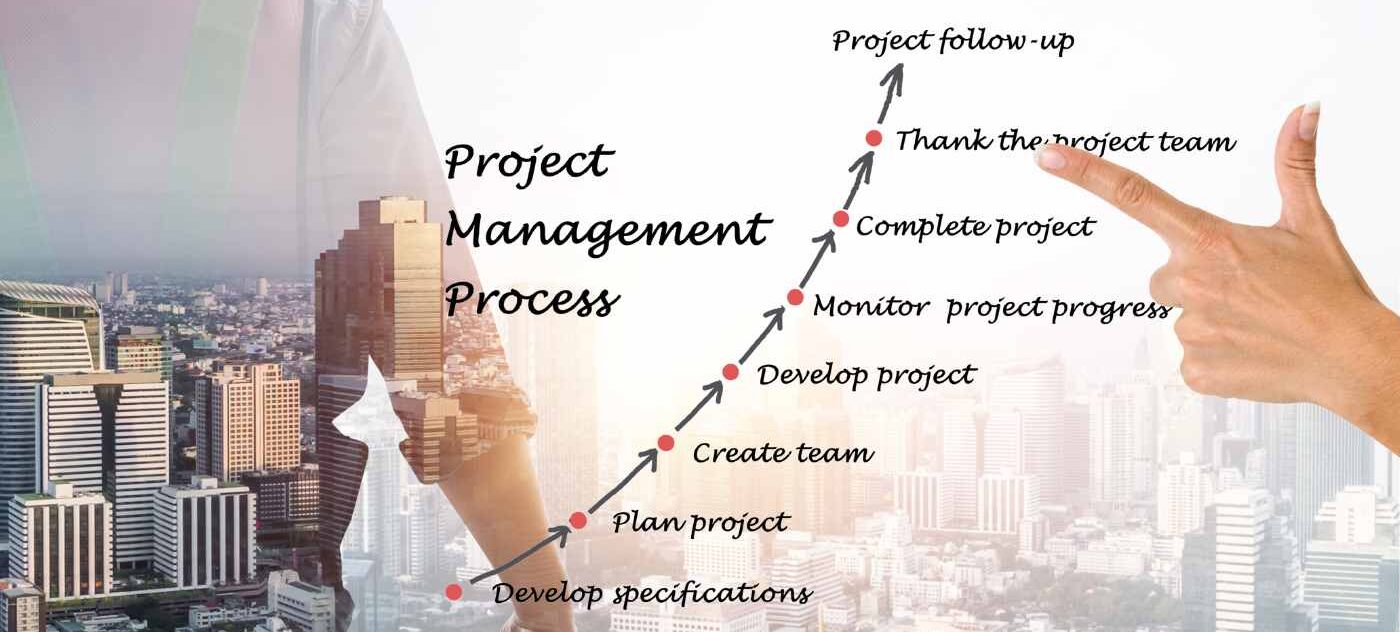
    8 Essential Project Management Processes

    Effective Project Management

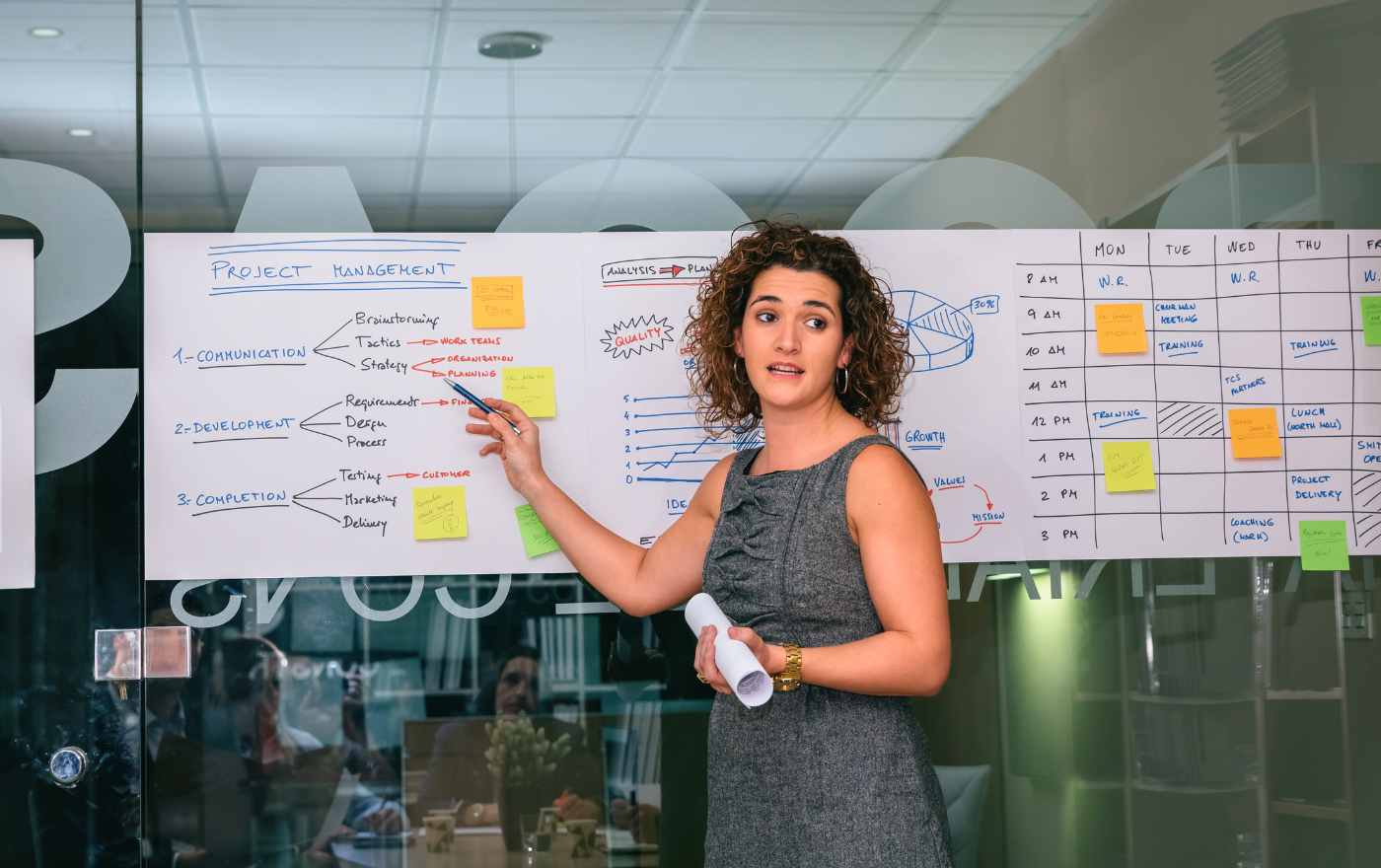
    Effective project management is the backbone of every successful organization. Whether you are driving a small internal initiative or managing a large cross-functional project, the right processes help you stay organized, prevent costly mistakes, and deliver predictable outcomes. By implementing structured and consistent project management practices, organizations can achieve better alignment, smoother execution, and higher stakeholder satisfaction.

    Project-Management-Processes-2

    Below are 8 essential project management processes that significantly enhance project performance.

    1. Clearly Define the Project

    Every successful project begins with a clear, well-structured definition. This includes establishing:

    • Project objectives
    • Scope and deliverables
    • Key stakeholders
    • Expected outcomes
    • Constraints and assumptions

    A well-defined project answers “What are we trying to achieve and why?”

    This early clarity creates alignment across managers, clients, and team members, minimizing confusion and unnecessary rework down the road.

    Reference: PMBOK® Guide – Project Integration Management emphasizes strong project initiation and chartering.

    2. Invest in Detailed Planning

    Once the project is defined, break it into manageable tasks and milestones. A detailed project plan should include:

    • Work Breakdown Structure (WBS)
    • Timelines and milestones
    • Resource allocation and responsibility assignment
    • Dependencies between tasks

    Good planning sets realistic expectations and ensures everyone knows what they need to do and when.

    Reference: Project Management Institute (PMI) recommends detailed planning as a key part of the Planning Process Group.

    3. Identify and Manage Risks Early

    Risk management helps you anticipate potential problems before they affect the project. This includes:

    • Listing possible risks
    • Assessing probability and impact
    • Prioritizing risks using tools like a risk matrix
    • Preparing mitigation and contingency plans

    Proactive risk management increases project resilience and reduces the likelihood of schedule delays or budget overruns.

    Reference: ISO 31000 – International Standard for Risk Management.

    Project-Management-Processes-1

    4. Maintain Strong Scope Management

    Scope management ensures the project stays aligned with originally approved goals. This involves:

    • Defining what is in and out of scope
    • Establishing a change control system
    • Tracking all change requests
    • Preventing unplanned work (scope creep)

    Without scope control, projects often drift, leading to missed deadlines and increased costs.

    Reference: PMI PMBOK® — Project Scope Management processes.

    5. Implement Effective Issue and Change Management

    Every project encounters issues and change requests. What matters is how efficiently they are handled.

    Key components include:

    • Issue logging and prioritization
    • Structured change approval workflow
    • Timely communication of impacts
    • Regular review of pending change requests

    This structured approach ensures that changes do not disrupt planned activities or derail the project.

    Reference: ITIL® Change Management Practices for structured change handling.

    6. Strengthen Communication and Documentation

    Communication is often cited as the #1 reason projects succeed or fail. Build a strong communication plan that outlines:

    • What information will be shared
    • With whom
    • Through which channels
    • How often

    Consistent communication helps keep all stakeholders aligned and prevents misunderstandings.

    Equally important is documentation — maintaining meeting notes, decisions, requirements, and changes. These records create transparency and act as a reliable audit trail.

    Reference: PMI Pulse of the Profession Report states poor communication leads to project failure in one-third of projects.

    7. Set and Maintain Quality Standards

    Quality assurance ensures the project deliverables meet organizational, regulatory, and client expectations. This includes:

    • Defining quality criteria
    • Conducting regular reviews and inspections
    • Implementing corrective actions
    • Applying continuous improvement methods

    Strong quality management helps avoid rework, ensures consistency, and enhances customer satisfaction.

    Reference: ISO 9001 – Quality Management System Standards.

    8. Track Data and Use Analytics for Decision-Making

    Modern project management goes beyond intuition — it is driven by data. Valuable project metrics include:

    • Schedule performance (SPI)
    • Cost performance (CPI)
    • Resource utilization
    • Risk trends
    • Issue closure rates

    Regular analysis allows project managers to identify deviations early, make smarter decisions, and improve future project planning.

    Reference: Gartner Research highlights that data-driven project management improves success rates by up to 28%.

    Key Takeaways

    ✔ Streamlined Workflows

    Applying structured processes improves clarity and helps teams execute work more effectively.

    ✔ Improved Accountability

    Defined roles and responsibilities create ownership and reduce ambiguity.

    ✔ Strong Risk Control

    Proactive identification and planning reduce project disruptions.

    ✔ Better Scope Discipline

    Keeping scope in check prevents cost and time overruns.

    ✔ Transparent Communication

    A strong communication plan fosters alignment and avoids misunderstandings.

    ✔ Consistent Quality

    Quality standards ensure deliverables meet expectations.

    ✔ Smarter Decisions Through Data

    Data-backed insights support continuous improvement and better project forecasting.

    Conclusion

    By adopting these eight essential processes, organizations can significantly enhance their project outcomes. Effective project management doesn’t happen by chance — it is the result of structured planning, disciplined execution, and proactive decision-making. When done right, it leads to better performance, happier stakeholders, and long-term organizational success.

    References

    1. PMI – Project Management Body of Knowledge (PMBOK® Guide)
      https://www.pmi.org/pmbok-guide-standards
    2. ISO 31000 – Risk Management Guidelines
      https://www.iso.org/iso-31000-risk-management.html
    3. ISO 9001 – Quality Management Systems
      https://www.iso.org/iso-9001-quality-management.html
    4. ITIL Change Management
      https://www.axelos.com/best-practice-solutions/itil
    5. PMI Pulse of the Profession Report (Communication impact)
      https://www.pmi.org/learning/thought-leadership/pulse
    6. Gartner Research – Data-Driven Project Management
      https://www.gartner.com/en

    Interesting article to read: Project Manager – Good 32 Habits