Introduction-Learn Project Management
If you’ve ever managed a task, planned an event, or coordinated with others to complete something, you’ve already used basic project management skills.
But here’s the truth:
You don’t need a technical background, expensive certification, or years of experience to start learning project management in 2026.
Whether you are:
- A teacher exploring online opportunities
- A non-tech professional feels stuck
- A mid-career individual (30s/40s) looking for a shift
This guide will help you understand, learn project management, and apply project management step-by-step—using simple language and practical examples.
What Is Project Management (Simple Definition)
Project management is:
The process of planning, organizing, executing, and completing a task or goal successfully.
Real-Life Example:
If you plan to build a website, you need to:
- Decide what pages you want
- Set a timeline
- Assign tasks
- Track progress
- Launch it
That entire process is project management.
Why Learn Project Management in 2026
Project management is no longer limited to IT companies.
It is used in:
- Digital marketing
- Content creation
- Education
- Freelancing
- Small businesses
Benefits:
- High-demand skills across industries
- Useful even without a job (for personal projects)
- Helps you become more organized and productive
- Opens doors to freelancing and consulting
Step-by-Step Roadmap to Learn Project Management
Step 1: Understand the Basics (With Clear Concepts)
What is a Project Lifecycle?
A project lifecycle is the step-by-step journey of a project from start to finish.
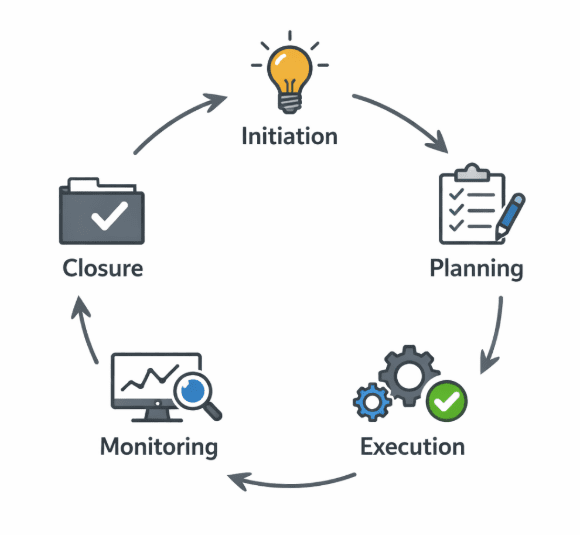
Think of it like planning and completing a task in stages.
The 5 Stages Explained:
1. Initiation (Starting the Project)
This is where the idea begins.
Example:
“I want to create a blog.”
2. Planning (Deciding How to Do It)
You decide:
- What tasks need to be done
- How long will it take
- Who will do the work
Example:
- Write content → 5 days
- Design → 3 days
3. Execution (Doing the Work)
This is where the actual work happens.
Example:
- Writing articles
- Designing pages
4. Monitoring (Tracking Progress)
You check:
- Are things on track?
- Are there delays?
Example:
If content is delayed → adjust timeline
5. Closure (Finishing the Project)
The project is completed and delivered.
Example:
The blog is published online
What Are Project Constraints?
Every project has limitations. These are called constraints.
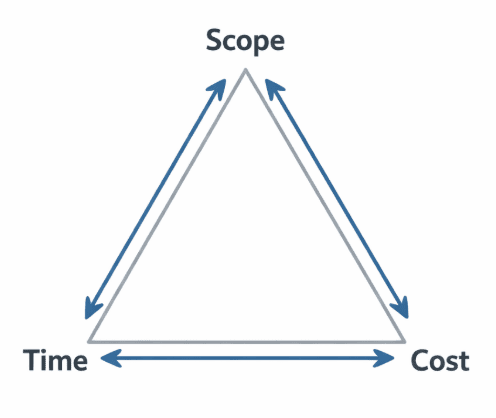
1. Scope (What Work Will Be Done)
Scope defines:
What is included and what is NOT included
Example:
- Included → Homepage
- Not included → E-commerce
2. Time (Deadline)
Time means:
How long you have to complete the project
Example:
Complete website in 10 days
3. Cost (Budget)
Cost means:
How much money you can spend
Example:
Budget = ₹15,000
Important Insight:
These 3 are connected.
- Increase scope → Time & cost increase
- Reduce time → Cost may increase
👉 Managing this balance is the core of project management.
Step 2: Learn Key Project Management Skills (Simple Explanation)
You don’t need coding skills. You need practical skills.
1. Planning and Organization
Breaking big work into smaller tasks.
Example:
Instead of “Build a website” →
Break into:
- Design
- Content
- Development
2. Communication
Clearly explaining updates, ideas, and problems.
Example:
- Informing a client about progress
- Asking team members for updates
3. Problem-Solving
Handling issues when things go wrong.
Example:
- Delay in work → adjust timeline
- Resource unavailable → find backup
4. Decision-Making
Choosing the best option among multiple choices.
Example:
- Free tool vs paid tool
- Freelancer vs in-house
5. Time Management
Completing tasks within deadlines.
Example:
Finishing work in 3 days instead of delaying
Step 3: Understand Project Management Methods (Made Simple)
A methodology is simply:
A structured way to manage a project
1. Waterfall (Step-by-Step Method)
- Work is done in a fixed order
- One step must be completed before the next starts
Example:
Design → Development → Testing → Launch
👉 Best for:
- Clear and fixed requirements
2. Agile (Flexible Method)
- Work is done in small parts
- You improve continuously
Example:
- Launch a basic version first
- Improve over time
👉 Best for:
- Projects where requirements change
3. Scrum (Agile Framework)
Scrum is a way to implement Agile.
Key terms explained:
- Sprint → A short work cycle (1–2 weeks)
- Backlog → List of tasks to be completed
- Daily Standup → Short daily meeting to discuss progress
👉 Simple understanding:
Work in small parts → Review → Improve
Step 4: Use Simple Tools (What They Actually Do)
Tools help you:
Organize tasks and track progress
Trello (Visual Task Tool)
- Works like a board
- Each task is a card
Example:
To Do → Doing → Done
Asana (Task Management Tool)
- Assign tasks to people
- Set deadlines
Example:
Assign “Write content” to a team member
Notion (All-in-One Tool)
- Combines notes, tasks, and planning
Example:
Write project plan + track tasks together
Step 5: Learn Through Free Resources
You don’t need to spend money initially.
Start with:
- Free online courses
- YouTube tutorials
- Blogs and articles
👉 Focus on understanding, not collecting certificates
Step 6: Practice with Real-Life Projects
This is the most important step.
Start with:
- Creating your own blog
- Managing a small project
- Helping a friend
👉 Learning + doing = real skill
Step 7: Explore Career Opportunities
Project management offers multiple career paths.
Job Roles:
- Project Coordinator
- Project Manager
- Scrum Master
Freelancing Opportunities:
- Managing website projects
- Handling marketing campaigns
- Coordinating remote teams
Is It Too Late to Learn Project Management?
No.
Many professionals start in their:
- 30s
- 40s
- Even later
Why?
Because project management depends on:
- Experience
- Communication
- Decision-making
👉 Skills that improve with age
Common Mistakes Beginners Make
- ❌ Only focusing on certifications
- 👉 Focus on practical skills instead
- ❌ Learning without applying
- 👉 Practice immediately
- ❌ Trying to learn everything at once
- 👉 Follow a step-by-step approach
- ❌ Ignoring communication skills
- 👉 This is one of the most important skills
Simple Action Plan to Start Today
Day 1–3: Learn project lifecycle basics
Day 4–7: Try tools like Trello or Notion
Week 2: Start a small project
Week 3–4: Take a beginner course
Month 2: Apply in real-world or freelance work
Final Thoughts
To learn project management is not about becoming perfect.
It is about becoming practical and effective.
The best project managers are not those who know everything,
but those who can plan, adapt, and deliver results.
Your Next Step
Start today:
- Pick a small project – it will help you learn project management better.
- Use a simple tool, so that you don’t complicate the process to learn project management
- Apply what you learn
👉 Consistency matters more than perfection.
While writing this article, my objective was simple: to help those who want to get into Project Management make an informed decision. Let’s connect to discuss, in case you have any questions around understanding the fundamentals & learn project management.
Connect with the PMProcesses.com Team.