Written by a PMP-certified professional who’s been in your shoes and wants to help you avoid the mistakes I made.
A PMP-Certified Professional’s Real Talk About Project Management Certifications
By someone who’s been through the trenches
Why I’m Writing This
I’m a certified PMP, and I’ve been working in project management for several years now. I remember when I was researching these certifications, sitting at my desk at 11 PM, juggling browser tabs, trying to figure out if PMP was worth it, whether I even qualified, and how much this was really going to cost me.
The internet is full of information, but most of it feels like it’s written by training companies trying to sell you courses, or by people who’ve never actually taken these exams. I wanted to write something different, the kind of article I wish I’d found back then.
So here’s what I’ve learned, both from earning my PMP and from watching colleagues go through both the PMP and CAPM journeys. This is the real story, with all the stuff nobody talks about.
Let’s Start With the Basics: What Are We Even Talking About?
The Project Management Institute (PMI) offers many certifications, but in my view, I see most people care about two main certifications:
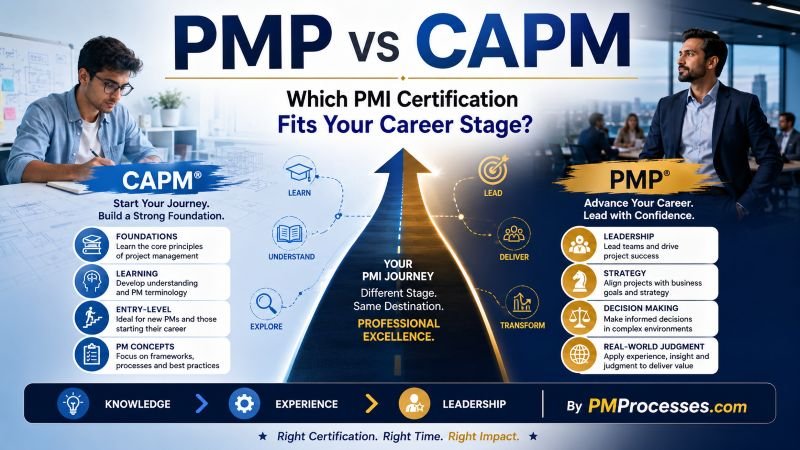
PMP (Project Management Professional) – This is the big one. It’s for people who’ve already been doing project management work and want to formalize their credentials.
CAPM (Certified Associate in Project Management) – This is the entry-level version. It’s designed for people who are new to PM or don’t have enough experience yet to qualify for PMP.
Both are globally recognized. Both will help your career. But they serve very different purposes, and choosing the wrong one can waste your time and money.
My PMP Journey: How I Got Here
When I decided to go for my PMP, I’d been leading projects for about four years. My title wasn’t “Project Manager.” I was a Team Lead and Functional Business Analyst, but I was absolutely doing project management work. I was initiating projects, building project plans, managing stakeholders, tracking budgets, and closing projects out.
Here’s what I didn’t know at first: Your job title doesn’t matter. PMI cares about what you actually did, not what was on your business card.
The Real PMP Requirements (From Someone Who Actually Went Through It)
Let me break down what you need to qualify for PMP:
If you have a four-year degree:
- 36 months (3 years) of non-overlapping project management experience.
- It has to be from the last 8-10 years
- You need to show you led projects, not just participated in them.
- Plus 35 hours of project management education.
If you have a high school diploma or an associate’s degree:
- 60 months (5 years) of project management experience
- Same 8-10 year window
- Same leadership requirement
- Same 35 hours of education
Now, here’s where it gets interesting. PMI wants to see that your experience covers what they call the “five process groups”:
- Initiating
- Planning
- Executing
- Monitoring and Controlling
- Closing
When I filled out my application, I had to document my experience across all five. You don’t need every project to cover all five—you just need to show that across your projects, you’ve done work in each area.
The 35 hours of education were easier than I thought. I took an online PMP prep course that gave me the 35 hours. It also helped me actually prepare for the exam, so it was a two-for-one deal.
Everybody May Not Tells You About the Application Audit Process
PMI randomly audits applications. About 20-25% of applicants get audited (based on what I’ve seen in PM communities).
If you get audited, you need to provide:
- Proof of your education hours (certificate from your training)
- Contact information for someone who can verify your project experience
- Sometimes, actual project documentation
I didn’t get audited, but my colleague did. She said it added about 2 weeks to her application timeline, but it wasn’t a huge deal as long as you were honest in your application.
Pro tip: When documenting your projects, be specific but concise. PMI doesn’t need your life story; they need dates, hours, and clear descriptions of what you did.
The PMP Exam: What I Experienced
Let me tell you about the exam itself, because this is where a lot of people’s expectations don’t match reality.
The Format (As of May 2026)
- 180 questions in 230 minutes (3 hours and 50 minutes)
- Mix of question types: multiple choice, multiple response, matching, drag-and-drop, and even some fill-in-the-blank
- You get two 10-minute breaks
- It’s offered in-person at testing centers or online (proctored)
I took mine online from home. It was convenient, but the online proctoring is strict; they watch you through your webcam the entire time. You need a clean workspace, no papers, no phones, nothing. They even make you scan your room with your webcam before starting.
What the Exam Actually Tests
Here’s the thing that surprised me: The PMP exam is not a memorization test.
I studied hard. I knew the PMBOK Guide. I memorized processes and knowledge areas. And then I sat down for the exam and realized it’s almost entirely scenario-based questions.
A typical question looks like: “You’re managing a software development project. The sponsor wants to add a new feature, but your team says it will delay the release by three weeks. Your customer is expecting the product on time. What do you do first?”
Then you get four options that all sound reasonable. You have to pick the MOST PMI-aligned answer.
The exam tests three domains:
- People (42%) – Leadership, team management, stakeholder engagement
- Process (50%) – The technical PM stuff
- Business Environment (8%) – Strategic and organizational context
Big news for 2026: Starting July 9, 2026, these percentages are changing. Business Environment is jumping from 8% to 26%. That’s a massive shift. If you’re taking the exam after July, you’ll need to focus way more on strategic thinking and organizational dynamics.
How I Prepared
I studied for about 4 months while working full-time. Here’s what worked for me:
Month 1: I took a 35-hour online prep course. This gave me my required education hours and taught me the fundamentals.
Month 2: I read the PMBOK Guide (well, skimmed parts of it—that book is dense). I focused more on understanding PMI’s philosophy than memorizing every process.
Month 3: Practice questions. Hundreds of them. I used online question banks and took notes on every question I got wrong.
Month 4: Full-length practice exams under timed conditions. This was crucial for time management. (IMPORTANT)
Total study time: Probably 100-120 hours spread over those 4 months.
The Day I Took the Exam
I was nervous. Like, really nervous. I’m not going to sugarcoat it; The exam is hard.
About 90 minutes in, I was second-guessing every answer. Some questions had two answers that both seemed right. The time pressure was real; you will have about 1.3 minutes per question.
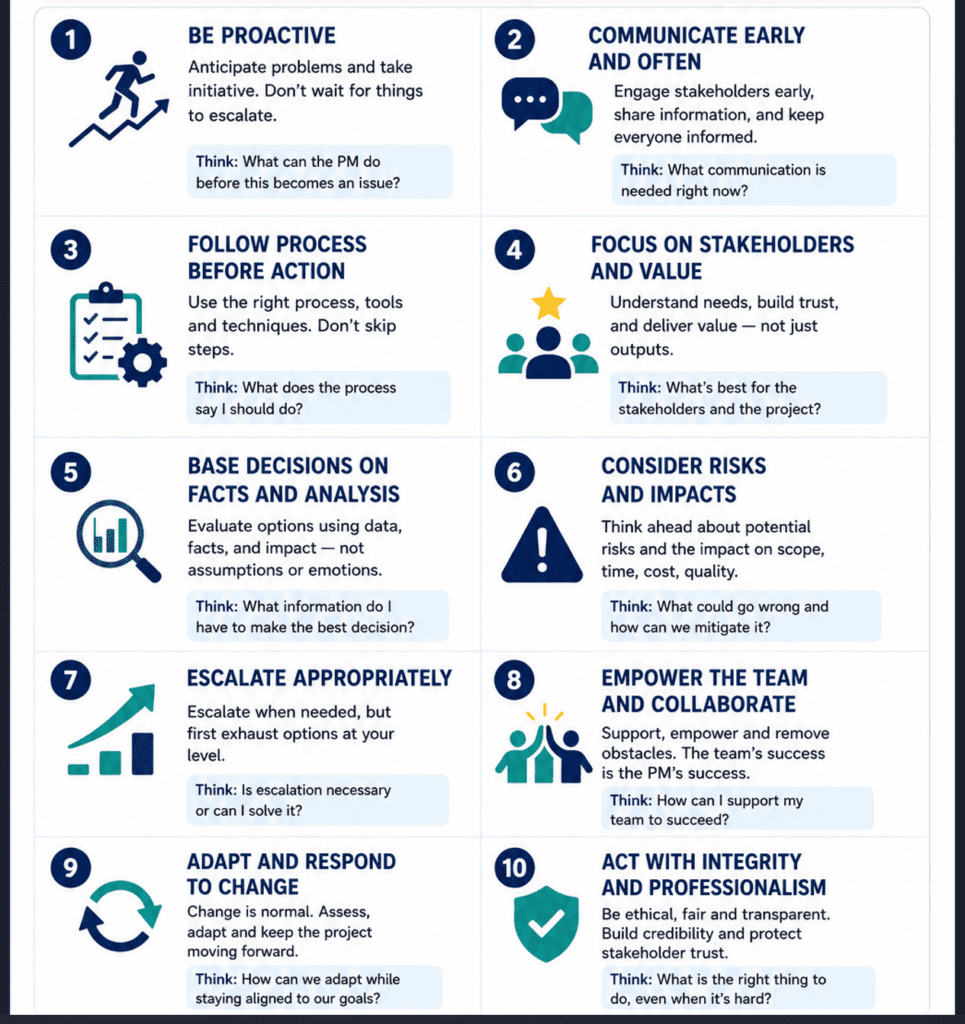
But here’s what helped me: I trusted my prep. When I was stuck between two answers, I asked myself, “What would PMI want me to do?” Usually, the answer was the one that involved:
- Communicating with stakeholders
- Following processes
- Being proactive rather than reactive
- Considering the business impact
I finished with about 15 minutes to spare, reviewed my flagged questions, and submitted.
Then came the worst part: waiting for the results.
The screen went blank for what felt like forever (probably 30 seconds). Then: “Congratulations, you passed.”
I actually yelled “YES!” out loud. My wife thought something was wrong.
The Results Breakdown
PMI doesn’t give you a percentage score. Instead, you get performance ratings for each domain:
- Above Target
- Target
- Below Target
- Needs Improvement
I think I got “Above Target” on People and Process, and “Target” on Business Environment. That was enough to pass.
You need to be at or above “Target” in all domains to pass. PMI doesn’t publish the exact passing score, but it’s estimated to be around 60-65% correct.
The Money Talk: What PMP Actually Costs
Let’s talk about what I spent, because this varies wildly depending on your choices.
My Actual Costs
PMI Membership: $139 (first year)
- Annual fee: $129
- One-time application fee: $10
Exam Fee (as a member): $405
Training Course: $1,200
- I went with a mid-range online course with live Q&A sessions
- This also gave me my 35 required education hours
Study Materials: $150
- Extra practice exam simulator
- PMBOK Guide (actually free with membership, but I bought a study guide)
Total: $1,894
Was PMI Membership Worth It?
100% yes. Here’s the math:
With membership:
- Membership: $139
- Exam fee: $405
- Total: $544
Without membership:
- Exam fee: $555
- Total: $555
So membership basically pays for itself immediately. Plus, you get:
- Free digital PMBOK Guide (worth about $99)
- Lower retake fees if you fail ($275 vs $375)
- Lower renewal fees every 3 years ($60 vs $150)
- Access to webinars, templates, and the PMI community
Important update: On August 6, 2026, the non-member exam fee is increasing from $555 to $675. That makes membership an even better deal; you’d save $131 by joining.
The Retake Insurance
I mentioned retake fees because it’s real. Not everyone passes the first time.
If I had failed:
- Member retake: $275
- Non-member retake: $375
- Plus, the emotional cost of studying again
I knew people who failed their first attempt. It happens. The pass rate isn’t officially published, but industry estimates put it around 60-70% for first-time test-takers. With good preparation, you can push that higher, but there’s no guarantee.
Now About CAPM: When It Makes Sense
I didn’t get CAPM. I went straight for PMP because I had the experience. But I’ve mentored several people who got their CAPM, and I’ve seen firsthand how it helps.
Who CAPM Is Actually For
CAPM is designed for people who:
- Don’t have 3-5 years of PM experience yet
- Are students or recent graduates
- Want to break into project management from another field
- Need credentials to get that first PM role
The requirements are way simpler:
- High school diploma or higher
- 23 hours of project management education
- That’s it. No experience required.
Why Some People Choose CAPM First
I’ve seen three common paths:
Path 1: The Student. Someone majoring in business or engineering gets their CAPM before graduating. It helps them land their first project coordinator role out of college.
Path 2: The Career Changer. Someone in IT support or accounting wants to move into PM. They get CAPM to show they’re serious and understand the basics. Then they work in PM roles for 2-3 years and get PMP.
Path 3: The Team Member. Someone who’s been supporting projects (project coordinator, business analyst, team lead) gets CAPM to formalize their knowledge and position themselves for advancement.
The CAPM Exam (Based on What I’ve Seen)
The CAPM exam is:
- 150 questions in 180 minutes (3 hours)
- Same scenario-based format as PMP, just slightly less complex
- You get a 10-minute break after question 75
- Available online or at testing centers
The content covers four domains:
- Project Management Fundamentals (36%)
- Predictive/Plan-Based Methodologies (17%)
- Agile Frameworks (20%)
- Business Analysis (27%)
From what my colleagues tell me, the exam is challenging but manageable with 2-3 months of focused study. It’s not a “memorize and regurgitate” test—you need to understand the concepts and how to apply them.
CAPM Costs
This is more affordable than PMP:
With membership:
- Membership: $139
- Exam: $225
- Training: $400-600
- Total: ~$750-950
Without membership:
- Exam: $300
- Training: $400-600
- Total: ~$700-900
The math is closer here. If you’re confident you’ll pass on your first try and don’t plan to get PMP later, you might skip membership for CAPM. But if there’s any chance you’ll pursue PMP down the road, get the membership now.
The Career Impact: What Actually Happened After I Got PMP
Let me tell you what changed for me after getting certified.
The Immediate Changes
Week 1: I updated my LinkedIn. Within two days, I had 5 recruiter messages. Not generic “Hey, you seem cool” messages – specific job opportunities with titles like “Senior Project Manager” and “Program Manager.”
Month 1: I wish I had had a conversation with my manager about a promotion I’d been working toward. The PMP wasn’t the only factor, but it definitely strengthened my case. I assume my manager would have said, “Having the PMP shows you’re serious about this career path.” – But let it be he is not a PMP…
Month 3: I got a job offer from another company. The salary was 28% higher than what I was making. I didn’t take it, OH NO WHY!!!.
The Long-Term Impact
It’s been over 3 years since I got my PMP, and here’s what I’ve noticed:
1. More opportunities, I get contacted about roles I wouldn’t have been considered for before. Government contracts that require PMP. Enterprise-level positions at Fortune 500 companies. Program management roles overseeing multiple projects.
2. Higher credibility When I’m in meetings with senior leadership in and outside your company, there’s an automatic level of credibility. The PMP signals that I know what I’m doing and I’m committed to this profession.
3. Better networking. The PMI community is huge. I’ve connected with other PMPs at chapter meetings and through online forums. These connections have led to opportunities I wouldn’t have found otherwise.
4. Actual knowledge. Studying for the PMP genuinely made me better at my job. I learned frameworks and techniques I now use daily. The Agile content, in particular, helped me navigate hybrid project environments.
The Salary Question
Everyone wants to know: “How much more money will I make?”
The research says PMP holders earn 17-33% more than non-certified peers globally. That’s what the PMI Salary Survey shows.
For me personally? I personally think one would not get a hike just because he/she is a PMP, but it may absolutely be a factor.
What They Don’t Tell You: The Real Challenges
Let me be honest about the parts that sucked.
The Study Grind
Studying for PMP while working full-time was exhausting. There were nights I wanted to quit. Weekends, I spent inside while friends were out. Times I questioned whether this was worth it.
The PMBOK Guide is not exciting reading. It’s dry, technical, and sometimes repetitive. I fell asleep reading it more than once.
Practice questions can be demoralizing. There were days I was scoring 60% on practice exams and thinking, “I’m never going to pass this.”
The Imposter Syndrome
Even after passing, I had moments of “Am I actually qualified to have this certification?”
The exam tests a specific body of knowledge. Real-world project management is messier. There were times in the first few months after getting certified when I encountered situations that weren’t in the PMBOK Guide, and I had to figure things out on the fly.
That’s normal. The PMP gives you a framework and foundation. Experience teaches you how to adapt it to reality.
The Maintenance
PMP isn’t a one-and-done certification. Every three years, you need to:
- Earn 60 PDUs (Professional Development Units)
- Pay a $60 renewal fee (as a member) or $150 (non-member)
PDUs aren’t hard to get—you can earn them by:
- Taking courses or webinars
- Reading project management articles
- Attending PMI chapter meetings
- Volunteering on projects
- Even working as a PM counts
But it’s something you have to stay on top of. I set a reminder to check my PDU count every 6 months to be on track.
If you let your certification lapse, you have to retake the exam. I’ve seen people who let this happen, and they regretted it.
PMP vs CAPM: My Honest Recommendation
Here’s how I advise people when they ask me which certification to pursue.
Get PMP if:
You have the experience – If you’ve been leading projects for 3+ years, don’t settle for CAPM. Go for the credential that matches your experience level.
You want to move into leadership – PMP opens doors to senior PM, program manager, and director roles. CAPM doesn’t carry the same weight for these positions.
Your industry values it – Government contracting, defense, and large enterprises often require or strongly prefer PMP. If you’re in these sectors, PMP is worth it.
You’re serious about PM as a career – If this is your profession, not just a stepping stone, get the professional-level certification.
Get CAPM if:
You’re just starting – If you’re a recent grad or career changer with less than 3 years of PM experience, CAPM is a smart starting point.
You need credentials fast – CAPM can be earned in 2-3 months. PMP takes longer to prepare for and requires experience first.
You’re not sure PM is for you – CAPM is a lower investment. If you’re testing the waters, start here.
You’re building toward PMP – Get CAPM, work in PM roles for 2-3 years, then get PMP. Your CAPM study and education hours count toward PMP requirements.
Get Neither if:
You’re not actually doing project management – If your role is purely technical or operational with no project component, these certifications won’t help much.
Your company doesn’t value certifications – Some organizations care more about results (I know a few very closely) than credentials. Know your environment.
You can’t commit the time – Half-assing the study won’t work. If you can’t dedicate 60-120 hours to PMP or 40-80 for CAPM, wait until you can.
The July 2026 Exam Changes: What You Need to Know
I mentioned this earlier, but it’s important enough to highlight again.
Starting July 9, 2026, the PMP exam is changing significantly:
Domain Weight Changes:
- People: 42% → 33%
- Process: 50% → 41%
- Business Environment: 8% → 26%
That Business Environment jump is huge. The exam is putting much more emphasis on:
- Strategic thinking
- Organizational context
- Value delivery
- Sustainability
- AI and technology impacts
New Content Areas:
- Artificial Intelligence in Project Management
- Sustainability considerations
- Enhanced stakeholder engagement
- Value-driven delivery
If you’re planning to take PMP soon, you have a decision to make:
Option A: Take it before July 9
- Study with current materials
- Smaller Business Environment section
- Need to be ready by early July
Option B: Take the new version
- Wait for updated study materials
- Learn the newest content
- More time to prepare
I honestly don’t know which is “better.” If I were studying now, I’d probably aim for before July 9 just because I know what the current exam looks like. But if you’re just starting your study journey, the new version might actually be fine since you’re learning fresh.
Common Questions I Get Asked
“Is PMP still relevant with all the Agile and tech changes?”
Absolutely yes. The PMP has evolved. The current exam covers Agile, hybrid, and predictive approaches. About 50% of the exam content relates to Agile methods.
In my actual work, I use a hybrid approach on most projects. The PMP gave me frameworks for both traditional and Agile methodologies.
“Can I get PMP if my title isn’t Project Manager?”
Yes. I did. So have countless others. PMI cares about your actual work, not your job title.
If you’ve been initiating, planning, executing, monitoring, and closing projects—even as a Business Analyst, Team Lead, Technical Lead, or whatever your title is—you likely qualify.
“How hard is the exam really?”
It’s hard, but passable with proper preparation. I’d rate it 7 out of 10 in difficulty.
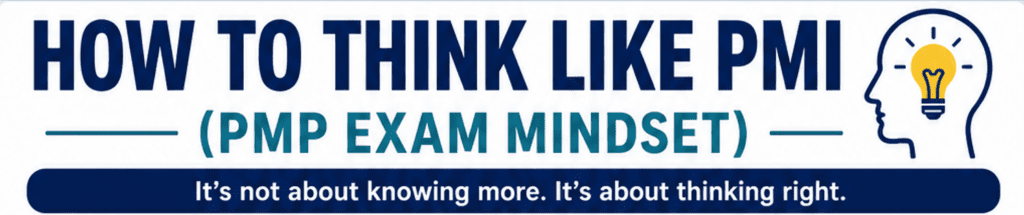
The hardest part isn’t the content—it’s the scenario-based questions where two answers look right. You need to understand PMI’s mindset and philosophy.
The hidden PMI mindset patterns:
- Be proactive
- Communicate before escalation
- Follow the process before acting impulsively
- Protect relationships and stakeholder trust
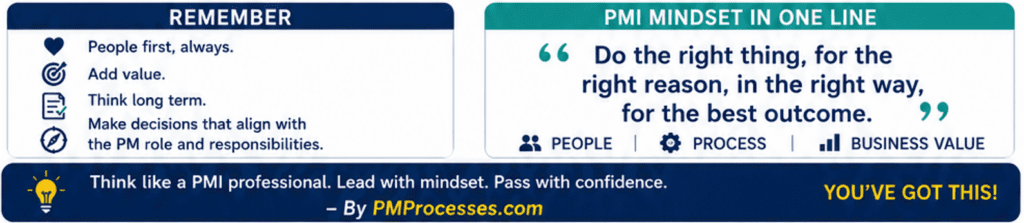
PMP doesn’t teach you exactly what to do. It teaches you how to think.
“Is it worth it if I’m not in IT?”
Yes. I know PMP holders in:
- Construction
- Healthcare
- Finance
- Manufacturing
- Government
- Energy
- Pharma
- Consulting
PMP is industry-agnostic. The principles of project management apply everywhere.
“What if I fail?”
You can retake it up to 3 times within a year. Many people who fail the first time pass on the second attempt.
The key is understanding where you went wrong and adjusting your study approach.
My Final Thoughts
Getting my PMP was one of the best career investments I’ve made.
Was it easy? No. Was it cheap? Not at all. Was it worth it? Absolutely.
The certification itself is just a piece of paper (or digital badge). What matters is:
- The knowledge I gained
- The doors that open
- The credibility it provided
- The community I joined
- The career trajectory it enabled
If you’re on the fence about pursuing PMP or CAPM, here’s my advice: Do your research, understand the requirements, be honest about where you are in your career, and make an informed decision.
Don’t let fear of the exam hold you back. Don’t let the cost paralyze you. If this aligns with your career goals and you’re willing to put in the work, go for it.
The project management profession is growing. PMI projects we’ll need 25 million new project professionals by 2030. The demand is there. The salaries are there. The opportunities are there.
Whether you choose PMP, CAPM, or neither- make it a deliberate choice based on your situation, not fear or uncertainty.
Resources That Actually Helped Me
Since I’m sharing my experience, here are the specific resources I used:
For PMP Prep:
- PMI’s official PMBOK Guide (free with membership)
- An online prep course from a PMI Authorized Training Partner
- I also took a PREP program from UDEMY by Joseph Phillips
- Practice exam simulators (I used multiple to get different question styles)
- PMI local chapter study group (this was invaluable for staying motivated)
Official PMI Sources:
- PMI website: pmi.org
- PMP Certification Handbook (updated regularly, currently March 2026 version)
- PMP Exam Content Outline
- PMI’s Certification Portal for the application
Communities:
- PMI local chapter meetings
- Project Management subreddit
- LinkedIn PM groups
- Study group with colleagues
One Warning: Be careful with “brain dumps” or sites claiming to have actual exam questions. PMI takes exam security seriously. Using these materials can get your certification revoked. Plus, they’re often wrong or outdated.
Stick to legitimate study materials from PMI or PMI Authorized Training Partners.
Keep in Touch
I’m passionate about project management and helping others navigate their certification journey. If you’re considering PMP or CAPM and have questions I didn’t cover here, feel free to reach out. Or you can contact the PMProcesses.com Team.
Remember: The certification is just the beginning. The real growth happens when you apply what you learned in the real world.
Good luck on your journey, whatever path you choose.
Written by a PMP-certified professional who’s been in your shoes and wants to help you avoid the mistakes I made.
Last updated: May 2026
PMP, CAPM, PMI, and PMBOK are registered trademarks of the Project Management Institute, Inc.