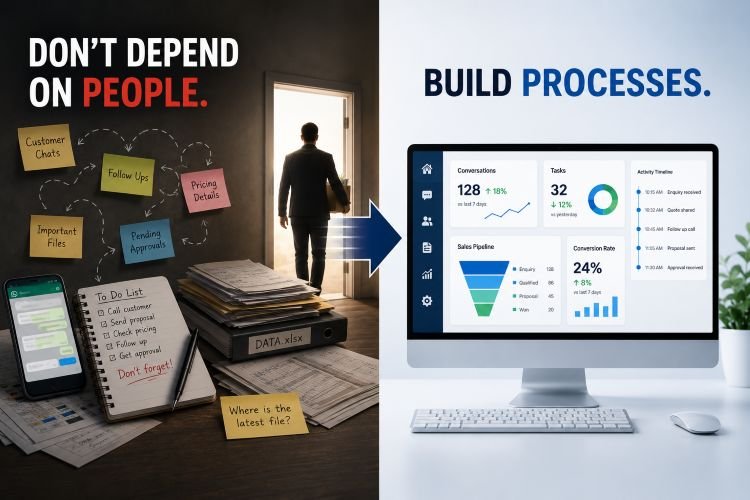

When system design goes wrong, the problem is often blamed on technology. The platform was too slow, the integration failed, the data model was messy, or the application could not handle growth. But in many cases, the real issue started much earlier. The system was built without a clear understanding of how the business actually works.
That is where business architecture becomes valuable.
Table of Contents
Business architecture gives structure to the way an organization creates value. It connects strategy, capabilities, processes, stakeholders, and use cases so teams can design systems that support real business needs instead of assumptions. For project managers, senior leaders, and business owners, this matters because system design is not just an IT concern. It directly affects delivery speed, operating cost, customer experience, and the ability to scale.

This article explains how business architecture shapes system design from the ground up, why use cases matter more than many teams realize, and how a stronger business view leads to systems that are easier to extend, govern, and grow.
What are you trying to achieve?
Are you trying to answer questions like:
- Why do some systems become difficult to scale even when the technology looks modern?
- How can business leaders influence system design without getting lost in technical detail?
- What is the connection between business use cases and long-term architecture decisions?
- How can we make better design decisions before implementation begins?
In practical terms, you want to understand how to reduce misalignment between business goals and technical solutions.
What Business Architecture Really Means
Business architecture is often misunderstood as a layer of diagrams or governance documents. In reality, it is a way of organizing business knowledge so decisions can be made with context.
It typically looks at questions such as:
- What capabilities does the business need to deliver value?
- Which processes support those capabilities?
- Who are the key stakeholders, users, and customers?
- What information needs to flow across the organization?
- Which business outcomes matter most?
Think of it as the blueprint for how the business operates. System design, then, is the blueprint for how technology supports that operation.
A useful analogy is building a logistics hub. You would not begin by choosing conveyor belts and scanning devices before understanding the flow of goods, storage requirements, timing pressures, and customer service commitments. In the same way, you should not design software before understanding the business capabilities and use cases it must support.
Why Use Cases Are the Starting Point
Use cases are where business architecture starts becoming practical.
A use case describes how a user, team, partner, or system interacts with the business to achieve a goal. Good use cases do more than describe features. They expose the real-world behavior that the system must support.
For example, a company may say it needs a “customer management platform.” That sounds clear enough until you ask what actually needs to happen. Then the real use cases appear:
Example Use Cases
- A sales manager needs to view all customer interactions across channels
- A service agent needs to resolve complaints without switching between systems
- A finance team needs accurate billing data from completed service records
- A business owner needs reporting across regions and product lines
These are not minor details. They shape decisions about workflows, permissions, integrations, data ownership, reporting structures, and performance requirements.
Without strong use cases, system design often becomes feature-driven. Teams build what seems useful rather than what the business truly depends on. That is how systems end up fragmented, over-customized, or difficult to scale.
How Business Architecture Influences System Design
Business architecture shapes system design by giving technical teams the context needed to make better structural decisions.
1. It Defines What the System Must Actually Support
A system should be designed around business capabilities, not just department requests.
This distinction matters. Department requests are often local and immediate. Business capabilities are broader and more durable. For example, “approve supplier contracts faster” may be a request. “Procurement governance” is the larger capability.
When system design is tied to capabilities, the result is usually more stable and reusable. The solution can serve multiple teams and adapt more easily over time.
2. It Clarifies Process Dependencies
Processes rarely operate in isolation. A customer onboarding process may involve sales, compliance, finance, operations, and support. If the architecture only reflects one team’s view, the system may work for that team but create friction everywhere else.
Business architecture helps teams map these cross-functional dependencies early. That leads to better workflow design, cleaner handoffs, and fewer surprises during implementation.
3. It Improves Data Design
Poor system design often shows up as poor data design.
When business terms are not clearly defined, systems end up using inconsistent definitions of customer, order, case, location, product, or revenue. This creates reporting issues, integration pain, and decision-making confusion.
Business architecture forces these definitions into the open. That makes it easier to design shared data models, establish ownership, and reduce duplication.
4. It Creates a Better Basis for Integration
Many organizations do not operate with one system. They operate with dozens. CRM, ERP, HR, finance, support, analytics, and industry-specific platforms all need to work together.
Business architecture helps identify where integration is essential, where it is optional, and where it creates risk. That leads to more deliberate interface design instead of last-minute patchwork.
The Link Between Business Architecture and Scalability
Scalability is often treated as a technical issue: traffic, processing load, infrastructure, storage, and concurrency. Those things matter, but they are only part of the story.
A system can be technically scalable and still fail the business.
For instance, the application may handle ten times more users, but if onboarding new regions requires manual configuration, if reports break when product lines expand, or if approval workflows become tangled as the organization grows, the business still hits a ceiling.
Business architecture strengthens scalability in three important ways.
Structural Scalability
This means the design can accommodate new business units, services, products, or geographies without being rebuilt from scratch.
When systems are aligned to capabilities and modular processes, expansion becomes easier. Teams can extend instead of replace.
Operational Scalability
This focuses on whether people can continue working effectively as transaction volume and complexity grow.
A system may look scalable on paper but create bottlenecks in approvals, case routing, exceptions handling, or reporting. Business architecture reveals these operational choke points before they become expensive.
Strategic Scalability
This is the ability to support future change.
Businesses evolve. New channels emerge, regulations change, customer expectations shift, and acquisitions happen. A well-architected system is not just built for today’s use cases. It is designed with enough flexibility to absorb tomorrow’s changes without constant redesign.
A Practical Example: Scaling a Service Business
Imagine a mid-sized field service company that handles installation and maintenance across several cities. At first, a basic system is enough. Jobs are scheduled manually, invoices are handled in batches, and customer history is stored across spreadsheets and separate tools.
As the business grows, problems appear:
- Scheduling conflicts increase
- Billing is delayed because service records are incomplete
- Managers lack visibility across regions
- Customers receive inconsistent service updates
- New branches adopt different workarounds
A purely technical response might be to buy a stronger platform or add integrations. That may help, but it does not solve the root issue.
A business architecture approach would start by identifying capabilities like service scheduling, technician dispatch, work order management, billing, customer communication, and performance reporting. It would examine the use cases across field staff, managers, finance teams, and customers. Only then would system design choices follow.
That changes the outcome. Instead of a collection of disconnected tools, the company can design a system landscape that supports consistent workflows, shared data, scalable processes, and better decision-making.
Common Mistakes Organizations Make
Treating business architecture as optional documentation
If business architecture is seen as paperwork, it gets skipped. Then teams make design decisions with incomplete context. The result is often rework later, usually at a much higher cost.
Designing around current org charts
Org charts change faster than business capabilities. If systems are designed around current reporting lines instead of enduring capabilities, they become fragile when teams are restructured.
Focusing on features before flows
A long feature list can create false confidence. What matters more is how work actually moves across people, systems, and decisions.
Assuming scalability only means volume
Growth is not just more transactions. It can also mean more products, more rules, more users, more locations, and more exceptions. System design needs to account for all of that.
Leaving business stakeholders out of architecture conversations
When business leaders disengage from design decisions, architecture becomes overly technical and less relevant. The strongest solutions come from shared ownership.
How Leaders Can Apply This in Real Projects
You do not need to be a solution architect to improve system design outcomes. A few disciplined questions can dramatically raise the quality of decisions.
Ask capability-first questions
Before discussing tools, ask: what business capability are we trying to strengthen, standardize, or scale?
Push for clear use cases
Do not accept vague statements like “we need better visibility” or “the system should be more flexible.” Ask who needs what, when, and why.
Look for cross-functional impact
If a system change helps one team, what does it do to the teams upstream and downstream?
Separate short-term fixes from long-term structure
Sometimes a workaround is necessary. The key is being honest about whether it is a bridge or a foundation.
Design for change, not just delivery
A project is not finished when the system goes live. The real test is whether the system still supports the business one, two, or five years later.
Final Thoughts
Business architecture is not an abstract planning exercise. It is a practical way to make system design smarter.
It helps organizations move from loosely defined requirements to systems built around real business capabilities and use cases. It improves data quality, integration decisions, process alignment, and scalability. Most importantly, it reduces the gap between what the business needs and what technology delivers.
For project managers, senior management, and business owners, that is the real opportunity. You do not need to design the technical solution yourself. But you do need to ensure the design is shaped by the business, not disconnected from it.
When that happens, scalability stops being an afterthought. It becomes part of the design from the beginning.
Frequently Asked Questions
1. What is the difference between business architecture and system architecture?
Business architecture focuses on how the organization operates, including capabilities, processes, stakeholders, and value delivery. System architecture focuses on how technology is structured to support those needs. One defines the business context; the other translates that context into technical design.
2. Why are use cases so important in system design?
Use cases show how real users and teams interact with the business to achieve outcomes. They help uncover workflow needs, decision points, data requirements, and integration dependencies that might be missed in high-level requirements.
3. Can a system be technically scalable but still fail the business?
Yes. A system may handle more users or transactions but still create operational bottlenecks, poor reporting, inconsistent processes, or inflexible workflows. True scalability includes business and operational scalability, not just infrastructure performance.
4. Who should be involved in shaping business architecture?
Business leaders, project managers, process owners, domain experts, architects, and sometimes frontline users should all contribute. Strong business architecture needs both strategic direction and practical operational insight.
5. When should business architecture be considered in a project?
As early as possible. It should inform scoping, requirements, priorities, and design choices before major technology decisions are locked in. Addressing it later usually leads to rework, delays, or systems that solve the wrong problem.
If you want to discuss or bounce your thoughts, do not hesitate.
My LinkedIn Profile
You can even connect with the team in case you have other questions.